Mesothelioma & Asbestos Law Firm In New York


Early, Lucarelli, Sweeney and Meisenkothen is an experienced mesothelioma and asbestos law firm that represents clients in many New York cities and towns, from the Bronx to Niagara Falls to Rochester.
Our mesothelioma lawyers have decades of experience helping victims in the Empire State. We’re familiar with the corporate practices of the large number of asbestos companies who operate in New York, as well as the ins and outs of asbestos legislation, litigation and liability issues.
Filing Mesothelioma Lawsuits in New York
In most cases, mesothelioma victims or their survivors can file an asbestos-related action in any state where they have provided military service, been employed or lived. Even if you are not currently stationed, working or residing in New York, you may be able to file an asbestos claim in that state.
Our skilled asbestos lawyers can help you determine the appropriate location for your case. We can also offer guidance on which court would be most likely to hear your case favorably, based on your circumstances.
Our New York Office
Early, Lucarelli, Sweeney & Meisenkothen
Address:
122 East 42nd St.
Suite 4700
New York, NY 10168
Phone:
800-336-0086
Mesothelioma Compensation in New York
Mesothelioma victims in New York can file personal injury or wrongful death asbestos lawsuits against those responsible for asbestos exposure. These lawsuits seek compensation for travel expenses, medical bills, lost wages, pain and suffering, funeral expenses and more. You may also be able to receive compensation from asbestos trust funds or through workers' compensation insurance.
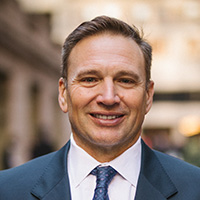
The New York County Asbestos Litigation (NYCAL) Court has special “In Extremis” dockets during the year established for living New York City mesothelioma victims. These dockets are designed to resolve New York mesothelioma lawsuits quickly to help living victims pay for treatment costs and enjoy a better quality of life.Brian Early,
Managing Partner and Mesothelioma Lawyer
New York is readily acknowledged as issuing the greatest amount of compensation to asbestos exposure victims of any state in the U.S. The amount you may receive can vary, but our asbestos law firm earns some of the highest settlements in the country, including a $4.3 million award for an Air Force veteran in New York.
Meet Our New York Mesothelioma Lawyers
Our team of mesothelioma lawyers is passionate about helping mesothelioma victims and families, and we’ve earned nearly $5 billion in settlements nationwide. The following attorneys from ELSM are licensed to practice in the state of New York:




New York Statute of Limitations for Mesothelioma
In New York, the statute of limitations for mesothelioma and asbestos personal injury claims is 3 years from date of diagnosis. For wrongful death claims, victims’ families have 2 years from the time their loved one passes away to file a claim.
Because there is only a short time to gather evidence and file a claim, mesothelioma victims in New York and their families are encouraged to find an experienced mesothelioma lawyer. Failing to act before the statute of limitations runs out could result in a loss of rights to compensation for you or your family.
Settlements for Mesothelioma Clients Living in New York
The following table represents some of the New York clients our asbestos law firm helped to receive financial compensation.
| State | Disease | Occupation / Exposure | Age | ~ Monies to Date |
|---|---|---|---|---|
| NY | Mesothelioma | Talc Powder User | 59 | ~$20,000,000 |
| NY | Mesothelioma | Abatement Worker / Painter | 70 | ~$12,600,000 |
| NY | Mesothelioma | Construction Worker / Machinist | 65 | ~$8,800,000 |
| NY | Mesothelioma | Navy Worker / Operating Engineer | 57 | ~$7,100,000 |
| NY | Mesothelioma | Navy Worker / Machinist | 51 | ~$6,900,000 |
| NY | Mesothelioma | Navy Worker / Plumber | 64 | ~$6,000,000 |
| NY | Mesothelioma | Insulator / Construction Worker | 82 | ~$5,900,000 |
| NY | Mesothelioma | Cosmetic Talc User | 79 | ~$5,600,000 |
Please note that individual cases vary based upon a number of factors, and prior results do not guarantee a similar outcome. If you have any questions about your legal rights, please contact our legal team.
Jobsites in New York with Documented Mesothelioma Cases
One of the highest-risk places for asbestos exposure is on the job. Many different jobsites throughout the state have put employees at risk for mesothelioma by exposing them to asbestos, especially in New York City. At the Brooklyn Navy Yard, for example, asbestos exposure was common through the early 1980s. The shipyards and power plants of Staten Island, NY and Syracuse also exposed workers to asbestos.
The lawyers of Early, Lucarelli, Sweeney and Meisenkothen have represented mesothelioma clients who worked at the following major job sites in New York:
- Aluminum Corporation of America - Massena
- Arthur Kill Powerhouse - Staten Island
- Astoria Generating Station - Astoria
- Bethlehem Steel Corporation - Lackawanna
- Bethlehem Steel Shipyard - Staten Island
- Brooklyn Navy Yard - Brooklyn
- Chase Manhattan Bank - New York
- Danskammer Point Powerhouse - Newburgh
- Eastman Kodak - Rochester
- GMD Shipyard - New York
- Grand Central Station - New York
- LaGuardia Airport - Queens
- Indian Point Nuclear Power Plant - Buchanan
- International Paper Company - Ticonderoga
- Lederle Laboratory - Pearl River
- Mt. Sinai Hospital - New York
- Niagara Mohawk Power Corporation - Syracuse
- Pennyslvania Central Railroad - New York
- Ravenswood Powerhouse - Queens
- Todd Shipyards Corporation - Brooklyn
- World Trade Center - New York
These are certainly not the only places in New York where people were exposed to asbestos. Regardless of where you or your loved one has lived, been employed or performed military service in New York, our firm can help you receive compensation for asbestos exposure.
ELSM Clients Living in New York
The mesothelioma lawyers of Early, Lucarelli, Sweeney and Meisenkothen have represented mesothelioma clients all over the state of New York, from Yonkers to Olean and beyond, helping them secure financial compensation for their families and loved ones.
Our clients reside in the towns and cities of New York listed below:
Top New York Cities and Towns Where ELSM Clients Live
| Afton, NY | Albany, NY |
| Albertson, NY | Altona, NY |
| Apalachin, NY | Ardsley, NY |
| Astoria, NY | Auburn, NY |
| Ballston Lake, NY | Ballston Spa, NY |
| Bay Shore, NY | Bellmore, NY |
| Binghamton, NY | Bronx, NY |
| Brooklyn, NY | Campbell, NY |
| Canandaigua, NY | Cedarhurst, NY |
| Centereach, NY | Centerport, NY |
| Cheektowaga, NY | Chester, NY |
| Cicero, NY | Commack, NY |
| Corning, NY | Cortlandt Manor, NY |
| Cropseyville, NY | Croton-on-Hudson, NY |
| Delanson, NY | Dunkirk, NY |
| East Elmhurst, NY | East Northport, NY |
| Elmira, NY | Farmingdale, NY |
| Floral Park, NY | Flushing, NY |
| Forest Hills, NY | Garden City, NY |
| Goshen, NY | Grand Island, NY |
| Greene, NY | Greenville, NY |
| Hadley, NY | Hagaman, NY |
| Hamburg, NY | Harriman, NY |
| Hartsdale, NY | Hilton, NY |
| Holland Patent, NY | Hudson, NY |
| Huntington, NY | Ilion, NY |
| Island Park, NY | Ithaca, NY |
| Jericho, NY | Johnstown, NY |
| Lake Grove, NY | Lake Pleasant, NY |
| Le Roy, NY | Leeds, NY |
| Lindenhurst, NY | Little Falls, NY |
| Liverpool, NY | Lockport, NY |
| Lyons, NY | Lyons Falls, NY |
| Macedon, NY | Mahopac, NY |
| Marathon, NY | Marcy, NY |
| Maspeth, NY | Millerton, NY |
| Modena, NY | Monroe, NY |
| Monsey, NY | Montour Falls, NY |
| Moravia, NY | Mount Vernon, NY |
| Napanoch, NY | Natural Bridge, NY |
| New Berlin, NY | New Rochelle, NY |
| New York, NY | New York City, NY |
| New York Mills, NY | Newburgh, NY |
| Niagara Falls, NY | North Babylon, NY |
| North Merrick, NY | North Tonawanda, NY |
| Ocean Beach, NY | Oceanside, NY |
| Ogdensburg, NY | Olean, NY |
| Olivebridge, NY | Oneida, NY |
| Orchard Park, NY | Oswego, NY |
| Owego, NY | Peekskill, NY |
| Poland, NY | Poughkeepsie, NY |
| Queensbury, NY | Remsen, NY |
| Rensselaer, NY | Ridge, NY |
| Rochester, NY | Rotterdam Junction, NY |
| Sackets Harbor, NY | Saint Johnsville, NY |
| Saratoga Springs, NY | Schenectady, NY |
| Sherburne, NY | Shokan, NY |
| Shrub Oak, NY | Sidney, NY |
| South Glens Falls, NY | South Huntington, NY |
| Springfield Gardens, NY | Staten Island, NY |
| Stephentown, NY | Suffern, NY |
| Syracuse, NY | Treadwell, NY |
| Utica, NY | Victor, NY |
| Wading River, NY | Wallkill, NY |
| Wantagh, NY | Waterford, NY |
| Watertown, NY | Webster, NY |
| Weedsport, NY | West Seneca, NY |
| Westbury, NY | Wevertown, NY |
| White Plains, NY | Whitestone, NY |
| Wolcott, NY | Woodside, NY |
| Yaphank, NY | Yonkers, NY |
Total number of New York towns and cities represented by ELSM: 142
New York Asbestos Laws
New York has passed numerous laws that regulate the manufacture, use and distribution of asbestos products. Many of these laws focus on improving air quality, asbestos abatement and litigation in state courts.
Asbestos Litigation in New York
When it comes to asbestos litigation, New York is one of the most active areas in the country. New York City sees so many asbestos-related lawsuits that a special court has been established to try asbestos cases: New York City Asbestos Litigation (NYCAL) court.
There is a dedicated NYCAL website that gives asbestos lawyers access to important documents, forms, rulings and other materials related to asbestos litigation. Similar NYCAL cases are frequently combined to help streamline the litigation process, and cases brought by terminally ill plaintiffs are given preferential access to the court process.
Asbestos Safety Guidelines in New York
In New York, asbestos safety guidelines are primarily carried out by three state agencies: the Department of Health, Department of Labor and Department of Environmental Conservation. As with other states, New York also adheres to the National Emissions Standards for Hazardous Air Pollutants (NESHAP) guidelines published by the U.S. Environmental Protection Agency (EPA).
The primary asbestos regulations protecting workers in New York are found in Title 12, Part 56 of the Official Compilation of Codes, Rules and Regulations of the State of New York (NYCRR), and they fall under the jurisdiction of the Department of Labor. These rules and regulations contain all of the various requirements employers must follow with respect to asbestos, including licensing and certification, air sampling, work area preparation, as well as abatement, cleaning and removal of asbestos from work sites. In addition, the Department of Health administers an Asbestos Safety Program to protect employees by offering asbestos safety training.
The New York State Department of Environmental Conservation (NYSDEC) oversees the implementation of the EPA’s NESHAP standards, as well as providing regulations for the transport and disposal of asbestos and asbestos containing materials after abatement or removal projects. In particular, transporters must receive permits to transport asbestos waste to a landfill. Solid waste management facilities also must adhere to certain NYSDEC guidelines when handling asbestos waste.
Frequently Asked Questions
Can I sue for mesothelioma in New York?
Yes. If you were exposed to asbestos through the negligent actions of another party, and you developed mesothelioma as a result, you can sue them for damages.
How do I file a mesothelioma claim in New York?
Filing a mesothelioma claim in New York can be a complex process, and proving liability for asbestos exposure can be difficult. An experienced asbestos lawyer can help you through the process.
What is the statute of limitations for mesothelioma claims in New York?
The statute of limitations is 3 years from diagnosis for personal injury claims and 2 years from the date of death for wrongful death claims.
Can family members of mesothelioma victims file a claim in New York?
Yes, family members of mesothelioma victims can file a wrongful death lawsuit in the state of New York. If your loved one passed away from mesothelioma, you may be able to obtain compensation for funeral costs, medical bills and lost companionship.
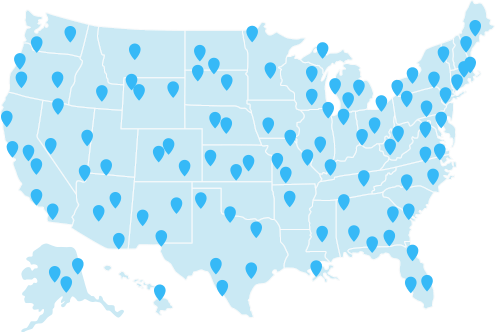
Select a state below to learn more about our team and the results we've secured in your area.

Request a Free Case Evaluation
Request a free case evaluation now if you or someone you love has been diagnosed with mesothelioma. The evaluation will cost you nothing. Our lawyers will travel to visit you at your convenience or conference call with you over the phone. We understand how difficult a time this is for you and will assist in any way that we can. You can also call us toll-free at 800-336-0086 at any time.
Attorney Early concentrates his work in asbestos bankruptcy matters. He oversees the bankruptcy department, makes bankruptcy court appearances, and addresses other bankruptcy-related issues. Attorney Early is a licensed attorney in New York, Connecticut, the Southern District of New York, and the Eastern District of New York.
Learn
More


 Please Answer 3 Quick Questions to