
Combustion Engineering Asbestos Trust Fund, Exposure & Compensation


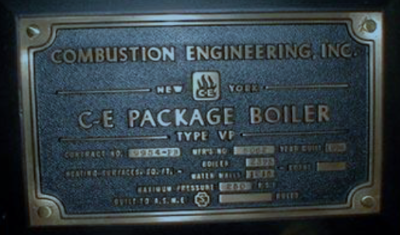
Combustion Engineering, Inc. (C-E) manufactured and supplied high-pressure boilers, stokers, and other industrial equipment used in factories, shipyards, and power plants. The company incorporated asbestos into these products for heat resistance and insulation.
After facing thousands of asbestos lawsuits, Combustion Engineering filed for Chapter 11 bankruptcy and established the Combustion Engineering 524(g) Asbestos PI Trust to compensate asbestos victims.
If you or a loved one developed mesothelioma or another asbestos disease after exposure to Combustion Engineering asbestos products, an asbestos attorney at Early, Lucarelli, Sweeney & Meisenkothen (ELSM) can help you file a Combustion Engineering asbestos trust claim.
Combustion Engineering Asbestos Trust At a Glance
- The Combustion Engineering 524(g) Asbestos PI Trust was established in 2006 and has funds remaining to pay eligible asbestos victims.
- To file a Combustion Engineering asbestos trust claim, the victim must be diagnosed with mesothelioma or another asbestos disease and prove Combustion Engineering is responsible for the exposure.
- Combustion Engineering asbestos exposure may have occurred during work involving boilers and steam systems at industrial facilities, aboard ships, and in shipyards.
- ELSM Law asbestos lawyers will review your case to determine your eligibility and file a Combustion Engineering asbestos claim on your behalf.
Understanding the Combustion Engineering 524(g) Asbestos PI Trust Fund
On February 17, 2003, Combustion Engineering, Inc. filed a voluntary petition for relief under Chapter 11 of the Bankruptcy Code. The United States Bankruptcy Court for the District of Delaware confirmed the debtor’s Plan of Reorganization on December 19, 2005 and the confirmation was later affirmed by the District Court on March 1, 2006.
The Combustion Engineering 524(g) Asbestos PI Trust became effective on April 21, 2006, to process and resolve asbestos-related personal injury claims against Combustion Engineering and certain affiliated entities. The asbestos trust fund was initially funded with approximately $1.24 billion in assets allocated for claims administered through the trust, consisting of cash contributions, debtor-issued stock, and insurance settlements.
Approximately 275,608 Combustion Engineering asbestos claims have been paid since the inception of the Trust. The Verus, LLC claims processing facility continues to process Combustion Engineering asbestos claims today.
In 2025, the Combustion Engineering 524(g) Asbestos PI Trust:
- Paid 14,046 asbestos claims.
- Paid approximately $39.38 million to asbestos victims.
- Reported approximately $14.56 million in settled but unpaid claims.
- Reported approximately $401.84 million in total assets.
Combustion Engineering Asbestos Trust Payment Percentage
The Combustion Engineering 524(g) Asbestos PI Trust will compensate victims exposed to Combustion Engineering asbestos products based on a payment percentage system that is designed to preserve money for future claims.
The scheduled value for a Combustion Engineering mesothelioma claim filed under the Expedited Review is $75,000. The current Combustion Engineering Asbestos Trust payment percentage is 15.3%. At a payment percentage of 15.3%, a Combustion Engineering mesothelioma claim filed under the Expedited Review process can be expected to receive the standard scheduled value payment of $11,475.
Determining Review Process for Combustion Engineering Asbestos Claims
When filing a Combustion Engineering asbestos claim, an experienced asbestos lawyer will review the claimant’s personal records to determine the appropriate review process to maximize the compensation.
Claim review options are:
- Expedited Review (ER): An ER claim is assessed under the standard review process to confirm it meets all requirements outlined in the Trust Distribution Procedures and qualifies for the applicable standard value payment.
- Individual Review (IR): An IR claim receives thorough evaluation of the claimant’s information to determine the individual liquidated value that may be higher or lower than the scheduled value for the applicable disease level. IR filing is required for certain lung cancer claims, secondary exposure cases, or if trust criteria is not met.
An asbestos attorney at Early, Lucarelli, Sweeney & Meisenkothen will evaluate the claimant’s case and file a mesothelioma claim on their behalf. Payments may vary depending on factors such as the claimant’s age, diagnosis, exposure history, economic loss, and the law firm’s prior settlement history.
Don't wait until it is too late to protect your rights! The evaluation will cost you nothing.

Combustion Engineering’s Role in Asbestos Exposure
Combustion Engineering (C-E) was formed in 1912 through the merger of the American Stoker Company and the Grieve Grate Company, with headquarters in Lower Manhattan, New York. The company became a major manufacturer of equipment used in power generation and shipbuilding throughout the United States, including:
- Boilers
- Stokers
- Steam generators
In the early twentieth century, C-E expanded through acquisitions in coal-burning technology and became known for its English-designed Type-E stoker, a mechanical coal-feeding system widely used in industrial and utility boilers.
During World War II, the company supplied high-pressure boilers and steam-generation systems used in U.S. Navy vessels and large-scale wartime shipbuilding programs. In the postwar decades, C-E entered the fossil-fuel and nuclear steam supply systems industries and continued to develop advanced steam propulsion technologies for commercial and military applications, including use in certain classes of U.S. Navy warships constructed during the 1960s and 1970s.
By the mid-twentieth century, Combustion Engineering had diversified its operations into chemicals, petrochemicals, cement products, refractory materials, and other industrial sectors while continuing its core boiler and steam systems business. Many of these products incorporated asbestos and exposed workers to the hazardous fibers over time.
Key events in Combustion Engineering’s asbestos history include:
- 1948: Merger with the Superheater Company.
- 1953: The company formally became known as Combustion Engineering, Inc., following decades of expansion and wartime production.
- Mid-1950s: Combustion Engineering purchased and developed its Windsor, Connecticut facility, including Building #3, known as the Kreisinger Development Laboratory, which supported early nuclear research and U.S. Navy submarine reactor programs. The site became one of the company’s principal research and development centers for both nuclear and fossil-fuel technologies.
- Mid-1950s: C-E acquired Lummus Company, expanding into oil, gas, refining, and petrochemical engineering.
- 1970s: The company began phasing out asbestos use in its industrial products, although existing exposure issues continued.
- 1990: Asea Brown Boveri (ABB) acquired Combustion Engineering, inheriting significant asbestos-related liabilities through corporate restructuring.
- 1990s-2002: Tens of thousands of asbestos lawsuits were filed against Combustion Engineering and related entities.
- 1999: ABB and Alstom merged to form a 50/50 joint venture, ABB-Alstom Power, which was later consolidated under Alstom.
- 2002: A Wisconsin jury found Combustion Engineering partially responsible for the death of a machinist who developed malignant mesothelioma after decades of occupational asbestos exposure while working around asbestos-insulated boilers manufactured by C-E at the Wisconsin Electric Power Company’s Oak Creek power plant from the 1950s through the 1970s. The jury concluded that the exposure contributed to his illness and death. The Wisconsin Court of Appeals later affirmed the $1.05 million verdict.
- 2003: Combustion Engineering filed for Chapter 11 bankruptcy protection to address thousands of pending asbestos claims.
- 2006: The Combustion Engineering 524(g) Asbestos PI Trust was established to process and pay asbestos claims.
- 2015: Portions of Alstom were acquired by General Electric, Inc.
Combustion Engineering Asbestos Products
Combustion Engineering manufactured boilers and steam-generation systems used at heavy industrial sites such as power stations, nuclear power plants, ships, and shipyards. These high-temperature systems commonly incorporated asbestos in refractory and insulation materials used to improve heat resistance, durability, and performance under extreme operating conditions.
In addition to its boiler systems, the company manufactured asbestos-containing insulation products beginning on July 5, 1963 and discontinued production in August of 1972.
Combustion Engineering manufactured and supplied the following asbestos products, many of which contained asbestos during certain periods of manufacture:
- C-E Package Boilers
- C-E Package Boilers, Type VP
- C-E Vertical-Unit Boilers, Type VU-10
- C-E Vertical-Unit Boilers, Type VU-55
- C-E #12 Insulating Block
- C-E #19 Insulating Block
- C-E A-1199 Insulating Cement
- C-E Block Stick
- C-E Buck Stay Cement A-1360
- C-E Calcrete 30
- C-E Casing Cement
- C-E Castablock
- C-E Expansion Joint Material
- C-E Fibrous Adhesive
- C-E Griptex Mineral Wool Block
- C-E Gunisul
- C-E Hilite Insulating Cement
- C-E Hytempt Flexible Compound
- C-E Kaiser M. Block
- C-E Kaiser Mineral Wool Cement
- C-E Lite Wate 22 Insulating Refractory
- C-E MHD Finishing Cement
- C-E Mix A
- C-E Pyroscat Fireproofing Cement
- C-E SDK 50 Insulating Cement
- C-E Stic-tite Insulating Cement
- C-E Stirrup Cement
- C-E Super 711 Insulating Cement
- C-E Super Finish Insulating Cement
- C-E Super Finish Stic-tite Insulating Cement
- C-E Super Stic-tite Insulating Cement
- C-E Utility Thermal Finish Cement


Who Was Most At-Risk for Asbestos Exposure?
Individuals who worked directly with Combustion Engineering boilers and refractory products were at risk of asbestos exposure. Additionally, family members who came into direct contact with these workers may have faced secondary asbestos exposure. Exposure to asbestos-containing products may lead to different types of mesothelioma and other asbestos-related diseases.
Occupational Exposure
Combustion Engineering employees who worked with boilers and asbestos-containing refractory materials, as well as tradesmen who worked around boilers and steam systems in poorly ventilated industrial environments, aboard ships, and in shipyards, may have been exposed to asbestos.
Even as evidence of asbestos-related health risks increased, tradesmen were not warned or given proper protective equipment when handling Combustion Engineering asbestos products.
Occupations at greater risk of Combustion Engineering asbestos exposure include:
- Boiler workers
- Boilermakers
- Chemical plant workers
- Construction workers
- Electricians
- Engineers
- Factory workers
- HVAC workers
- Insulators
- Machinists
- Maintenance workers
- Navy veterans
- Oil refinery workers
- Pipefitters
- Pipecoverers
- Power plant workers
- Railroad workers
- Shipyard workers
- Steamfitters
Secondary Asbestos Exposure
Tradesmen who worked directly with asbestos-lined boilers and asbestos-containing refractory products, including materials manufactured by Combustion Engineering, may have unknowingly put family members at risk of secondary asbestos exposure by carrying asbestos fibers home on their clothing, shoes, and hair. This exposure occurred through direct contact with the occupationally exposure person (OEP) covered in asbestos dust or by handling and laundering asbestos-contaminated clothing.
If you believe your mesothelioma diagnosis is related to secondary exposure, you may be eligible to file a Combustion Engineering asbestos trust claim.
Understanding Your Legal Right to Compensation
Filing a Combustion Engineering mesothelioma claim with the Combustion Engineering 524(g) Asbestos PI Trust requires specific documentation that complies with the Trust Distribution Procedures and filing deadlines.
An asbestos lawyer at ELSM will:
- Review your medical records to assess your Combustion Engineering asbestos claim eligibility.
- Collect your employment history to identify Combustion Engineering asbestos exposure.
- Connect your work history to known Combustion Engineering jobsites or obtain written testimony confirming asbestos product exposure associated with Combustion Engineering.
- File your Combustion Engineering Asbestos Trust claim correctly with the required documentation.
- Monitor Combustion Engineering asbestos claim status and contact the Trust administrators to ensure timely progress.
With decades of experience handling asbestos trust claims, ELSM Law will guide victims throughout the Combustion Engineering claim filing process and is dedicated to helping clients secure the compensation they deserve. Contact us today for a free case evaluation.
Frequently Asked Questions
How do I file a Combustion Engineering claim through the Combustion Engineering 524(g) Asbestos PI Trust?
An ELSM Law asbestos lawyer will review your case to determine eligibility and prepare and file your mesothelioma claim with the Combustion Engineering 524(g) Asbestos PI Trust.
Can a family member file a Combustion Engineering Asbestos Trust claim?
Yes, family members may file a mesothelioma claim after death of loved one who had exposure to Combustion Engineering asbestos products. Family members who have experienced secondary asbestos exposure and were diagnosed with mesothelioma or lung cancer may qualify to file a Combustion Engineering asbestos claim.
How much compensation can I receive through the Combustion Engineering Asbestos Trust?
An ELSM Law asbestos lawyer will determine the appropriate review process to file your Combustion Engineering asbestos claim. A mesothelioma claim could receive a standard scheduled value offer of $75,000 and receive a settlement between $11,475 and $61,200 based on the current Combustion Engineering asbestos trust payment percentage.
How long do I have to file a claim with the Combustion Engineering Asbestos Trust?
The deadline to file a Combustion Engineering asbestos claim is determined by applicable state laws and the Trust Distribution Procedures. Claimants diagnosed before February 17, 2003, generally were required to file by March 1, 2010 if they had previously filed related asbestos claims or a bankruptcy proof of claim. Claimants diagnosed on or after February 17, 2003, were required to file within three years of diagnosis or by March 1, 2010, whichever was later. An ELSM Law asbestos attorney will review your case and determine the correct filing deadline to ensure your Combustion Engineering asbestos claim is submitted within the applicable statute of limitations.

Request a Free Case Evaluation
Request a free case evaluation now if you or someone you love has been diagnosed with mesothelioma. The evaluation will cost you nothing. Our lawyers will travel to visit you at your convenience or conference call with you over the phone. We understand how difficult a time this is for you and will assist in any way that we can. You can also call us toll-free at 800-336-0086 at any time.
Attorney Early concentrates his work in asbestos bankruptcy matters. He oversees the bankruptcy department, makes bankruptcy court appearances, and addresses other bankruptcy-related issues. Attorney Early is a licensed attorney in New York, Connecticut, the Southern District of New York, and the Eastern District of New York.
Learn
More


 Please Answer 3 Quick Questions to