
Fore River Shipyard Asbestos Exposure & Compensation


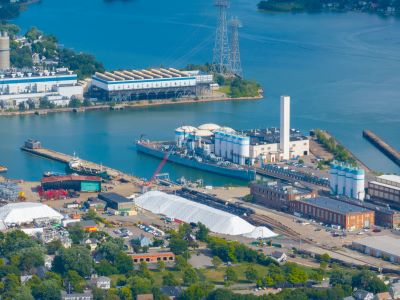
Fore River Shipyard, located in Quincy, Massachusetts, built hundreds of Naval and civilian ships during its operation. Throughout the 20th century, American shipyards like Fore River relied heavily on asbestos-containing products for their fire- and heat-resistant properties. The construction of large surface vessels and submarines at Fore River Shipyard led to frequent asbestos exposure, putting military servicemen, civilian workers, and Navy shipyard workers at significant risk.
Exposure to asbestos can cause serious diseases, including mesothelioma, lung cancer, and asbestosis. The Massachusetts mesothelioma lawyers at Early, Lucarelli, Sweeney & Meisenkothen (ELSM) have extensive experience representing mesothelioma victims who worked at Fore River Shipyard.
Fore River Shipyard at a Glance
- Also known as: Bethlehem Fore River Shipyard (1913–1963); General Dynamics Quincy Shipbuilding Division (1964–1986); Quincy Shipyard.
- At least 13 asbestos trust funds, established to compensate mesothelioma victims, recognize Fore River Shipyard as a known asbestos exposure jobsite.
- Individuals diagnosed with mesothelioma linked to Fore River Shipyard asbestos exposure should contact a top mesothelioma law firm to explore compensation options. ELSM Law has over 40 years of experience holding companies accountable for asbestos exposure.
Fore River Shipyard & Asbestos Exposure in Shipyards
Through the 1970s, asbestos was widely used at Fore River Shipyard and throughout the shipbuilding industry. In the years leading up to World War II, the shipyard increased its capacity to produce ships for the U.S. Navy, employing 32,000 people, including more than 1,000 women. Following the War, the yard continued to produce U.S. Navy destroyers, cruisers, submarines, and merchant vessels, including oil tankers and liquefied natural gas carriers.
Regardless of the ship type, whether diesel or nuclear-powered, asbestos was used throughout the shipyard, exposing tens of thousands of shipyard workers, military personnel, and civilian contractors to the carcinogen.
Notable United States Navy ships constructed at Fore River Shipyard in Quincy include:
| Ship | Ship Type | Commissioned |
|---|---|---|
| USS Lawrence (DD-8) | Destroyer | 4/14/1903 |
| USS Lexington (CV-16) | Aircraft carrier | 2/17/1943 |
| USS Lexington (CV-2) | Aircraft carrier | 12/14/1927 |
| USS Massachusetts (BB-59) | Battleship | 5/12/1942 |
| USS Salem (CA-139) | Cruiser | 5/14/1949 |
| USS Springfield (CL-66) | Cruiser | 9/9/1944 |
Asbestos was commonly used in the insulation of ship boilers, engines, turbines, and pipes. The heat-resistant material was found in many other ship and submarine components below deck, especially in boiler rooms and engineering spaces, where gases and liquids were circulated through asbestos containing valves, pumps, compressors, gaskets, and packing materials.
During vessel construction and overhaul, asbestos insulation, gaskets, and packing were frequently cut, removed, and replaced. In the confined, poorly ventilated spaces below deck where naval and civilian workers performed their duties, the air was often thick with dangerous asbestos fibers that could be inhaled by sailors, shipyard workers, and other naval personnel.
Fore River Shipyard was acquired by Bethlehem Steel in 1913 and later operated under Bethlehem Shipbuilding Corporation. In 1964, General Dynamics assumed ownership, and the yard became part of the General Dynamics Quincy Shipbuilding Division. Workers may recognize both names in employment and asbestos exposure records. The Quincy yard continued building naval and merchant vessels until shipbuilding operations formally ceased in 1986.

A complete guide delivered next day to your doorstep. Treatment Information, top doctors & cancer centers, financial assistance and more.
High-Risk Occupations at Fore River Shipyard
Many shipyard workers and naval personnel at Fore River Shipyard worked in positions with a higher risk of asbestos exposure and asbestos-related disease.
Some of the most common high-risk occupations for asbestos exposure in shipyards include:
- Boilermakers
- Chippers
- Electricians
- Engineers
- Firefighters
- Firewatch
- Insulators
- Machinists
- Mechanics
- Navy veterans
- Painters
- Pipefitters
- Plumbers
- Shipfitters
- Welders
Secondary Asbestos Exposure
Various tradesmen who worked at the Fore River Shipyard often carried asbestos fibers home on their clothing. Family members who had direct contact with these workers, or laundered the contaminated clothing, could have been exposed to these deadly fibers. Individuals diagnosed with asbestos-related illnesses, such as mesothelioma, from secondary exposure may be eligible for the same compensation as those directly exposed in the shipyard.
You would get paid commission on the amount of pipe you covered, and everybody was working hard and fast and breathing hard and fast. We worked 12 hours a day for weeks when they had to get a ship out. The environment was very, very dirty. Dust flowing all over the place. The asbestos would be dropped and stepped on and ground up, and then the blowers that were blowing air in would blow that dust all around. It was a very bad atmosphere.Pipe Coverer
Fore River Shipyard, 1940-1945
Asbestos Products Used at Fore River Shipyard
Until the 1980s, many asbestos-containing products were used aboard naval ships, submarines, and merchant vessels, as well as throughout Fore River Shipyard’s shops, repair areas, and other workspaces.
Some of the most common asbestos-containing products used at Fore River Shipyard and across the shipbuilding industry include:
- Boilers and boiler components
- Engine components
- Flooring
- Gaskets
- Insulation
- Paint
- Pipe insulation
- Pumps
- Sealants
- Valves
- Wiring
Compensation for Fore River Shipyard Workers and Veterans With Mesothelioma
The use of asbestos at the Fore River Shipyard created serious health risks for shipyard workers, military personnel, and civilians. If you or someone close to you has recently been diagnosed with asbestos-related disease, such as lung cancer or mesothelioma, as a result of asbestos exposure at the Fore River Shipyard, you may be entitled to compensation.
Many of the companies that supplied asbestos products to the Fore River Shipyard are still in business, and an ELSM mesothelioma lawyer can pursue legal action against any company whose products are linked to your exposure. Compensation may be available through asbestos trust funds established by companies that filed for Chapter 11 bankruptcy. Exposed workers or veterans can file claims directly with these trusts.
An experienced mesothelioma law firm can recover compensation through filing mesothelioma claims to help cover medical expenses, lost income, and provide financial stability for you and your family.
Asbestos Trust Funds
Fore River Shipyard itself does not have a dedicated asbestos trust fund. However, many bankrupt manufacturers that supplied asbestos-containing products used at the shipyard or aboard vessels that were built, repaired, or overhauled there have established trust funds to compensate workers who developed mesothelioma or lung cancer.
Several bankrupt asbestos companies that have active asbestos trust funds recognize Fore River Shipyard (Bethlehem Steel / General Dynamics) in Quincy, Massachusetts, as an approved exposure jobsite. The following companies manufactured asbestos-containing products used at the shipyard.
| Bankrupt Asbestos Company | Asbestos Exposure Start Date | Asbestos Exposure End Date |
|---|---|---|
| Armstrong World Industries | 1/1/1942 | 12/31/1982 |
| Babcock & Wilcox | 1/1/1903 | 12/31/1982 |
| Combustion Engineering | 1/1/1940 | 12/31/1982 |
| Eagle-Picher Industries | ||
| Fibreboard | 1/1/1973 | 12/31/1982 |
| Flexitallic | 1/1/1941 | 12/31/1982 |
| GAF Corporation | 12/21/1959 | 11/6/1963 |
| Halliburton | 1/1/1936 | 12/31/1982 |
| Keene Corporation | 1/1/1942 | 12/31/1982 |
| Owens Corning | 1/1/1940 | 12/31/1982 |
| Owens-Illinois | 4/11/1956 | 12/31/1958 |
| Pittsburgh Corning | 1/1/1971 | 12/31/1982 |
| United States Gypsum | 1/1/1940 | 1/2/1968 |
| United States Mineral | 1/1/1960 | 12/31/1982 |
Asbestos Lawsuits
Workers and veterans exposed to asbestos at Fore River Shipyard may be eligible to file an asbestos lawsuit against manufacturers and suppliers of asbestos-containing products to pursue compensation through mesothelioma settlements or trial verdicts.
When asbestos exposure occurs at Fore River Shipyard, mesothelioma claims are generally filed in Massachusetts state court, although some cases may be transferred to federal court. Massachusetts has created a specialized court to manage the thousands of asbestos-related cases moving through its system and to help ensure that living mesothelioma patients receive compensation as quickly as possible.
Our mesothelioma attorneys prioritize securing prompt compensation while minimizing the amount of time and involvement required from their clients so they can focus on treatment and care.


Veteran Benefits
Veterans who experienced asbestos exposure at Fore River Shipyard during their military service and were later diagnosed with mesothelioma may be eligible for benefits through the Department of Veterans Affairs (VA). An experienced mesothelioma attorney can help you navigate the process of applying for VA benefits while also pursuing a mesothelioma lawsuit and asbestos trust claims. ELSM Law has a VA-accredited attorney who can assist you with filing your VA claims at no cost.
Common Questions About Asbestos Exposure at Fore River Shipyard
Can former Fore River Shipyard workers file asbestos trust fund claims?
Yes. Workers exposed to asbestos at Fore River Shipyard who later develop mesothelioma or other asbestos-related diseases may be eligible to file claims with bankruptcy asbestos trust funds. Eligibility generally depends on:
- Exposure history
- Diagnosis of an asbestos-related disease
- Connection to a trust fund company
A qualified mesothelioma attorney can help identify the appropriate trusts and file claims.
When was asbestos used at Fore River Shipyard?
Asbestos use at Fore River Shipyard, and throughout the shipbuilding industry, began in the early 1900s and was gradually phased out in the 1970s. By the late 1920s, companies were aware of medical and scientific studies documenting the health risks of asbestos exposure. Despite this knowledge, asbestos-containing materials remained common on ships and in shipyard facilities for decades. Asbestos was present in gaskets, valve and pump packing, compressors, wiring, and other shipboard components. As a result, exposure to asbestos at Fore River Shipyard may have occurred even after the 1970s.

Request a Free Case Evaluation
Request a free case evaluation now if you or someone you love has been diagnosed with mesothelioma. The evaluation will cost you nothing. Our lawyers will travel to visit you at your convenience or conference call with you over the phone. We understand how difficult a time this is for you and will assist in any way that we can. You can also call us toll-free at 800-336-0086 at any time.
Attorney Kenney is an ELSM partner with 22 years at the firm. Brian helped secure multiple jury verdicts over $20 million for clients exposed to asbestos-contaminated talc. He also handles mesothelioma cases involving secondhand and environmental asbestos exposure.
Learn
More


 Please Answer 3 Quick Questions to